Understanding Relevance AI and Its Core Purpose
Relevance AI is an innovative platform designed to help businesses make better and faster decisions by transforming raw data into actionable insights using artificial intelligence. In today’s data-driven world, organizations are often overwhelmed by the sheer volume of unstructured data they collect from various sources, such as customer feedback, surveys, support tickets, social media, and internal documents. Relevance AI offers a solution to this problem by leveraging advanced natural language processing (NLP), machine learning, and data visualization tools that allow companies to extract meaning from vast, unorganized datasets. The platform aims to democratize relevance ai AI, meaning that it empowers teams without deep technical knowledge to work with AI models and generate insights that were previously only possible with the help of data scientists.
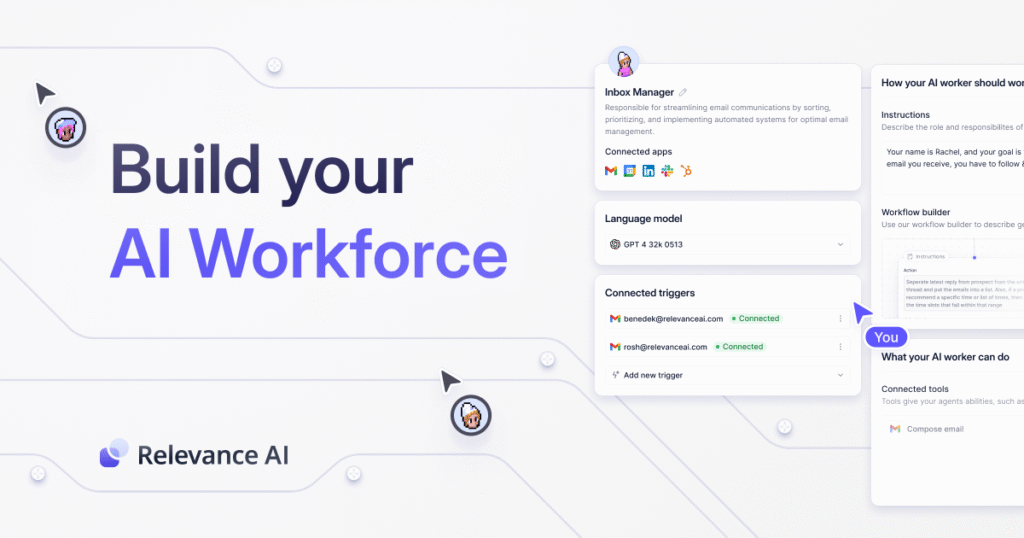
How Relevance AI Works: No-Code and Low-Code Capabilities
One of the key strengths of Relevance AI is its no-code and low-code environment, which allows non-technical users to create AI workflows without writing complex code. The platform features an intuitive drag-and-drop interface where users can build and customize data pipelines that process, categorize, and visualize large volumes of text and other forms of data. By utilizing pre-trained AI models, users can analyze sentiments, identify recurring themes, and understand customer intent or feedback trends more efficiently than manual analysis. For teams that have some coding expertise, the low-code functionality provides the flexibility to tailor models or integrate with other systems through APIs. This blend of usability and power makes Relevance AI accessible to both startups and large enterprises seeking to enhance their data intelligence capabilities.
Use Cases Across Various Industries
Relevance AI finds applications in a wide range of industries including customer experience (CX), product development, market research, and operations. In customer support, for example, it helps teams categorize and prioritize support tickets by sentiment or urgency, thereby reducing response times and improving customer satisfaction. In product teams, it enables analysis of user feedback to identify features users love or areas needing improvement. Market researchers benefit by gaining insights from open-ended survey responses, helping them understand customer needs without manually reading thousands of responses. Even human resources departments can use Relevance AI to analyze employee feedback, performance reviews, or exit interviews, allowing them to make data-informed decisions around workplace culture and retention strategies. These diverse applications underscore the platform’s adaptability and usefulness in extracting value from text-heavy datasets.
The Role of Vector Databases and Embeddings
At the heart of Relevance AI’s technology is the use of vector databases and embeddings, which are essential in understanding the meaning and context of unstructured data. Embeddings are mathematical representations of text that capture semantic meaning, allowing AI models to find patterns and similarities that may not be obvious through keyword-based methods. Vector databases store these embeddings in a way that enables fast and accurate searches for related content. This means that companies can not only organize and tag their data, but also search through it intelligently — finding similar feedback, questions, or documents based on meaning rather than exact wording. This deeper level of understanding improves data discovery and enhances decision-making based on contextually rich insights.
Challenges and Future Outlook of Relevance AI
Like any emerging technology, Relevance AI also faces challenges, especially in areas such as data privacy, model transparency, and integration with legacy systems. Ensuring that AI outputs are explainable and trustworthy is a growing concern for organizations that need to justify automated decisions to stakeholders. Moreover, while the no-code approach simplifies deployment, organizations must still invest in training and change management to ensure teams can effectively use these tools. Looking ahead, the future of Relevance AI appears promising, with continued investment in model improvement, real-time analytics, and broader integrations with enterprise platforms. As AI adoption continues to rise, platforms like Relevance AI will play a crucial role in making data-driven decisions more accessible, scalable, and intelligent across all sectors.